Scale changes the reading
A small phoenix in a decorated initial functions differently from a full-page plate. The first may act as a compact sign that depends on nearby text; the second can establish a world, hierarchy and dramatic pause of its own.
Illustrators decide which details survive reduction. A clear wing silhouette and one controlled light source usually communicate more at page scale than many equally emphatic feathers.
The printed bird enters circulation
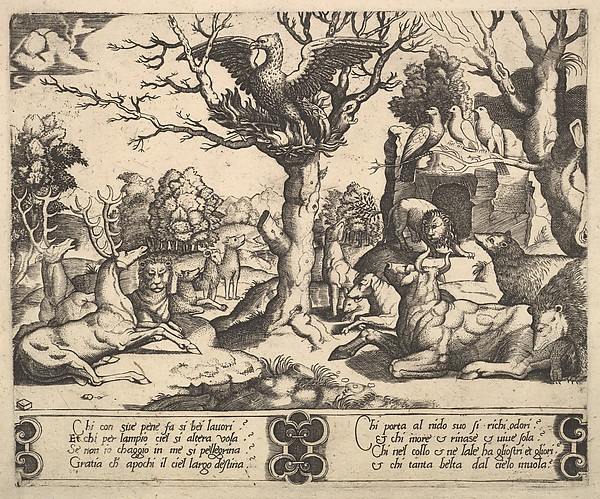
The Met’s sixteenth-century engraving after the Master of the Die places a phoenix above an assembly of animals. As a reproducible print, the image could move beyond a single architectural or manuscript setting while retaining a carefully organized central figure.
Open-access museum images now create another form of circulation. Their public-domain status enables reuse, but accurate title, date, maker, object number and repository still matter.
Contemporary illustration can show its sources
A modern illustrator may borrow the logic of radial feathers or the contrast between black line and luminous centre without copying a protected character. Source notes can identify the historical works studied and the elements newly invented.
That record helps readers see design as a conversation rather than a claim of timeless authenticity.
Sources and further reading
This article distinguishes source evidence from editorial visual analysis. Last reviewed 30 August 2026.