Origins
Trace how fire-bird stories change when they move between languages, eras and cultural settings.
Enter this themeMyth · Material · Meaning
An independent journal examining the phoenix across legend, decorative art, architecture and contemporary visual culture.
Explore the SymbolEditorial note Myth is identified as myth. Decorative marks are not presented as historical scripts.
Three editorial lenses
Trace how fire-bird stories change when they move between languages, eras and cultural settings.
Enter this themeRead the choices behind carved medallions, seals and architectural reliefs—from sketch to finish.
Enter this themeCompare renewal, cycles, light and transformation without turning interpretation into historical fact.
Enter this themeFeatured stories
 Myth
MythThe familiar bird rising from flame is the result of many retellings, not one fixed ancient account.
EmblemsRoundels give a façade a contained field for portraits, devices and ornament—while repetition creates rhythm across a building.
CraftA contemporary studio workflow from research and scale drawing to relief depth, finish and documentation.
SymbolismFire can illuminate, destroy, transform or reveal. Context decides which reading an image can support.
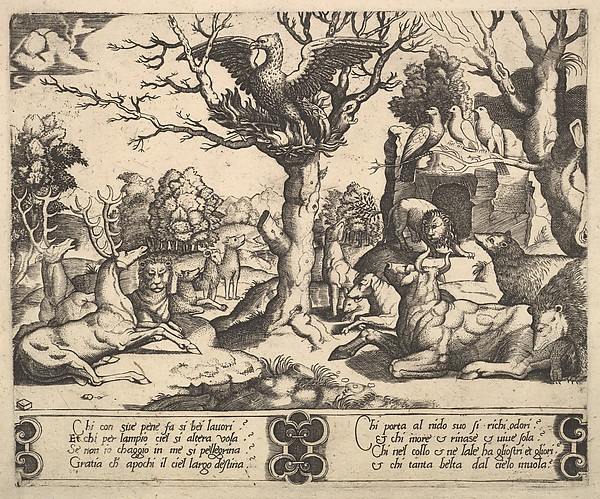
IllustrationMargins, initials and full-page plates gave the fire-bird different jobs: explanation, allegory, spectacle and atmosphere.
DesignResearch, abstraction and disclosure can turn historical study into original work without manufacturing false provenance.
Anatomy of an emblem
This educational diagram names visual parts without assigning an invented history to the border marks. The arrangement is contemporary and deliberately generic.
Invented study · not an artefact
The primary subject and silhouette.
A boundary that contains the visual field.
Rhythm and spacing; not automatically writing.
Stone, clay, wood, metal or a digital simulation.
Surface contrast, finish and the direction of illumination.
From stone to symbol
Sequence matters: evidence guides the drawing, material limits the depth, and documentation preserves what happened.
Read the craft guide ↗Define the commission, examine documented objects and record what is source evidence.
Test silhouette, radial balance, border rhythm and relief depth at the intended scale.
Match grain, strength, weather exposure and mounting method to the design.
Establish major planes first, then refine feathers, edge strength and surface transitions.
Choose tool texture, polish, pigment or metal accents without manufacturing false age.
Record maker, date, dimensions, material, treatments, photographs and source references.
Research principles
Our method keeps primary texts, museum records, later interpretation and original visual analysis in separate, visible layers.
Claims begin with a cited text, museum record or conservation resource.
Literary tradition is not presented as archaeological or scientific fact.
Related birds and motifs are compared without being collapsed into one tradition.
Original and public-domain illustrations carry clear source and status notes.
About the publication
Emblem & Fire Journal studies how one compelling image changes across writing, material and visual media. It is designed as an editorial resource, not as a substitute for a museum catalogue, conservator or cultural authority.
All launch articles use the institutional byline Emblem & Fire Editorial Desk. No individual author, academic title or field credential has been invented. Verified contributors can replace that byline before publication.
Our mission & accountabilityFrequently asked
Ancient Greek and Roman writers connect the bird with Egypt and Heliopolis, but their accounts differ. Herodotus explicitly says he knew it through pictures and reports. The familiar self-renewing bird emerged through later retellings rather than one unchanged source.
They are often compared because of solar associations and Heliopolis, but treating them as identical can erase differences in language, religious context and surviving evidence. We name the Bennu separately.
A circle can frame and organize an image, but it does not carry one universal historical meaning. Interpretation depends on the building, object, maker, date, patron and documented context.
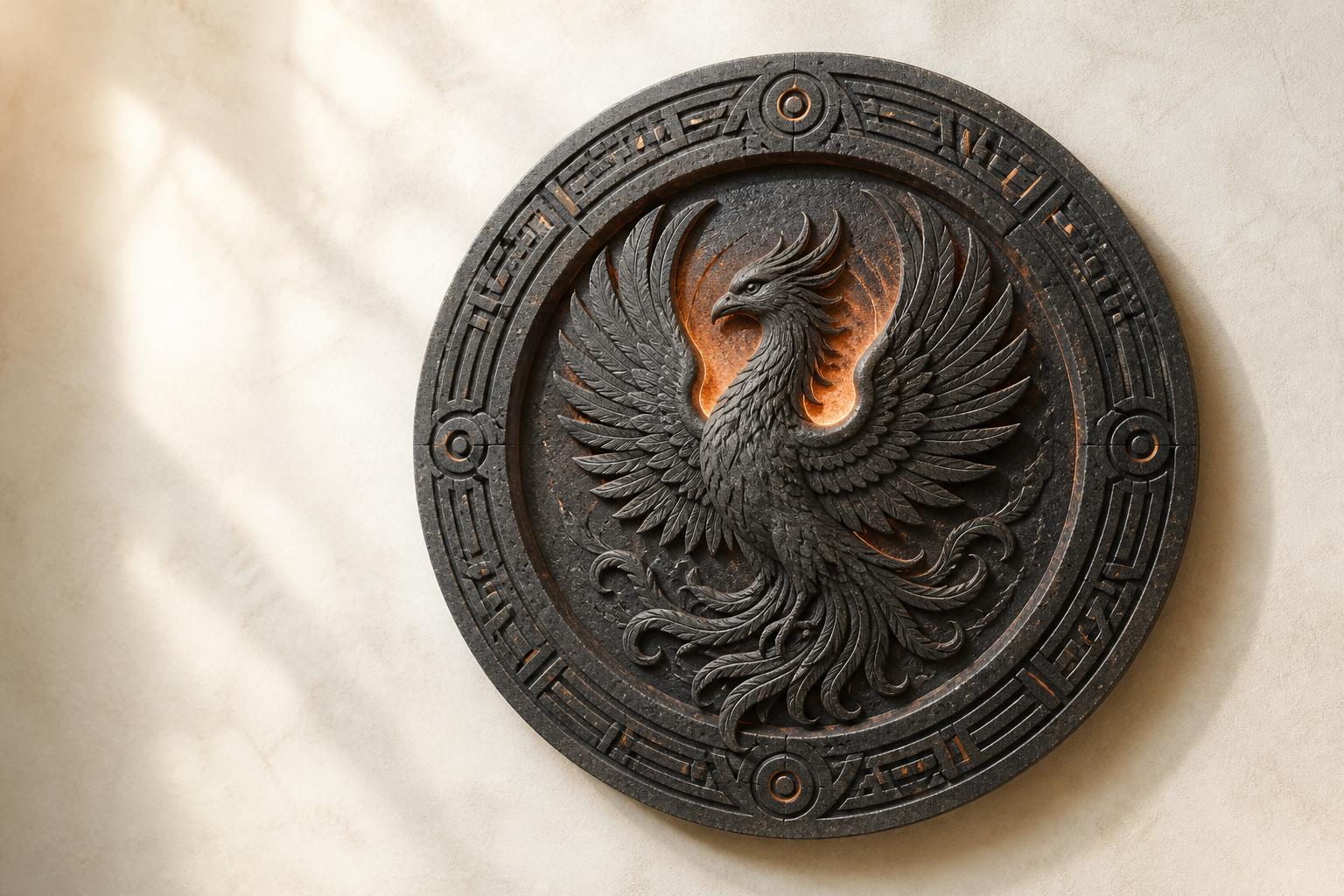
No. They are newly invented decorative incisions with no language, translation or asserted historical significance.
Articles distinguish what a primary text or museum record states from later comparison and our own visual analysis. Uncertainty is kept visible, and sources appear on every article page.
The hero and social card are original AI-assisted editorial illustrations created for this project. The Renaissance phoenix engraving is a public-domain Open Access image from The Metropolitan Museum of Art and is credited wherever used.